
Macro Monitor
Inflation Still Below Fed’s Target, Near Term Pressure Is Moderate

Inflation is still below the Fed’s target and near term pressure is only moderate. This gives the Fed some room to ease further if the economy falters.
Interest Rate Expectations

In the near term, U.S. interest rates are expected to be range-bound, and we remain neutral on the U.S. yield curve. Bond Market Risk Aversion Index fell again in January, and remains on a “lower risk” signal.
New “Lower Risk” Signal Generated

Bond Market Risk Aversion Index fell in December, resulting in a new “lower risk” signal that closed out the “higher risk” signal which occurred back in May. We are now cautiously optimistic.
Risk Aversion Edged Up - Stay Defensive And Be Patient

The Risk Aversion Index edged up during November. It is still on a “higher risk” signal. We will stay defensive and be patient. Higher quality assets within the fixed income space are favored.
Risk Aversion Fell Sharply, But Caution Still Warranted

The Risk Aversion Index fell sharply during October. Despite the sharp drop in the index, it has not fallen enough to generate a new “lower risk” signal. Our take on the current reading is “wait and see” with a bias towards lower risk.
Risk Contagion Underway, But There Is A Silver Lining

A Risk Contagion is now underway, and we continue to stay defensive and favor higher quality assets within the fixed income space. A silver lining: When the Risk Aversion Index moves above 1, odds start to favor a decrease in risk aversion going forward. The bulk of the move is probably done.
Lost Confidence In Washington….. But Not U.S. Treasuries

The new deal reached by Congress has little substance and no impact at all until 2014 or beyond. More “kick the can down the road.” Long term debt/deficit issues remain unsolved.
It Is All About Confidence

As we expected, the U.S. downgrade was digested by the market fairly quickly and attention turned to the economy. This is a bear market in confidence, more than anything else.
It’s The Economy, Stupid

U.S. likely averted worst-case scenario of default, but credit rating downgrade is still likely. Main impact of downgrade is not the increase in interest rates itself, but rather the liquidity risk in all markets that involve treasury securities as collateral.
Losing Confidence In Washington But Not U.S. Treasuries, At Least Not Yet

The inability of our politicians to recognize and resolve short and long term debt/deficit issues has caused many of us to lose even more confidence in Washington.
Longer Term Concerns About U.S. Debt And Deficit

$4.8 trillion of the additional $9 trillion in debt that Uncle Sam is expected to incur over the next decade is interest obligation.
Risk Aversion Index Says “Wait And See”

The Monthly Risk Aversion Index edged down slightly in June, pausing for a clearer direction. The biggest contributors of risk are commodities and credit spreads.
Longer Term Concerns About U.S. Debt And Deficit

More than one-half of the U.S. government’s additional $9 trillion in debt expected over the next ten years is projected to be interest. This is a frightening proposition.
Now Entering Increasing Risk Aversion Environment

Risk Aversion Index accelerated in May, making it prudent to favor defensive assets near term. Expect small and gradual increase in long term interest rates.
The Bond Bubble Is Beginning To Deflate… Is This Cheap Money Era Ending?
An orderly decline of the dollar is not necessarily a big concern. On the other hand, a sudden collapse of the dollar, in conjunction with spiking U.S. interest rates, would be a terrible thing. So far this has not been the case.
The Bond Bubble Is Beginning To Deflate… Is This Cheap Money Era Ending?

Long term interest rates could continue rising, as inflation expectations increase and investors demand higher yields.
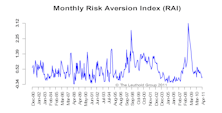
Monthly Risk Aversion Index (RAI)

This month’s “Inside The Bond Market” presents our new “Risk Aversion Index,” which was developed by Chun Wang to respond to those factors that the bond market is truly worrying about. The Index examines ten factors on a monthly basis to help best position a bond portfolio.
The Bond Bubble Is Beginning To Deflate… Is This Cheap Money Era Ending?

Bond bubble deflating, as investors demand higher yields to compensate for rising inflation and mountain of debt.
The Bond Bubble Is Beginning To Deflate… Is The Cheap Money Era Ending?

The bond bubble is deflating, as investors demand higher yields to compensate for expected rising inflation and the U.S. mountain of debt.
The Bond Bubble Is Beginning To Deflate… Is The Cheap Money Era Ending?

We raised most of our twelve month yield targets this month, based on higher inflation expectations and U.S. debt concerns. Extremely low yields at the short end of the curve are the result of a stimulative Fed policy. Rising yields at the long end of the curve reflect rising inflation expectations.
 Subscribe to Advisor Newsletter