
Of Special Interest ...examining a significantly timely topic
Stocks Vs. The Dollar—More Complicated Than You Think
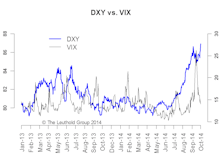
The recent strength in the dollar coincided with a spike in volatility and weakness in risky assets, but the relationship over the last couple years has been tenuous at best.
Are We Floating In Another Share Buyback Bubble?

Share repurchase activity among U.S. corporations is garnering a lot of negative attention as aggregate dollars spent on share buybacks are nearing the all-time highs last seen leading up to the financial crisis. We take a closer look at the recent activity to see if we are in for a repeat.
Global Airlines - Capacity Data Favors U.S. Airlines
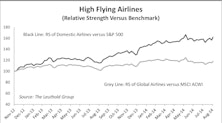
Economic expansion and industry consolidation have created tighter capacity and improved performance for North American Airlines. Other parts of the globe are experiencing planned capacity expansion, a trend that will affect the entire industry.
Sector Valuations: A Top-Down Look At Risk & Opportunities – Predicting Relative Returns

Cheapest three sectors on a relative basis: Info Tech, Health Care, Energy
The Ten-Year Stock Market View: Are Above-Average Returns Possible?

Unfortunately, the upswing since early 2009 can be considered immature only from the perspective of its age. The math just doesn’t support the secular case.
Strength In Transportation: A Deeper Dive
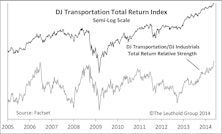
Bull markets rarely come to an end prior to the Transports exhibiting weakness. Their outperformance continues this year, returning an impressive +9.9% through June 4th, almost doubling the S&P 500’s +5.2%. We examine the underlying Transport groups and assess which areas are providing the strength to help sustain the Transportation Index’s leadership.
Two Market Anomalies Intact: A Quantitative Review
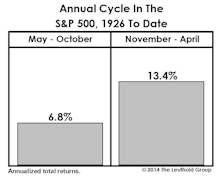
We are entering the most bearish window among the potential combinations of the Presidential Election Cycle and the Annual Cycle.
Profit Margins At The Sector Level
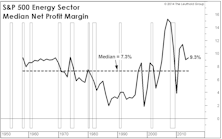
All ten of the S&P 500 sectors recorded a sequential increase in four-quarter trailing net profit margins. But consider where sector margins stand today relative to their 25-year medians. Eight of ten S&P 500 sectors are recording profit margins well above their long-term medians.
Technology’s Prospects For Long Term Leadership Looking Good

Nine Technology groups are in the top quintile of our group model, and the sector has strengthened on a relative basis after twice “testing” a trendline that dates back to the early 2000’s tech wreck. There’s reason to believe the new uptrend has longer-term legs.
Secular Bull Or Bear?

Is a new secular bull market underway? New highs in essentially all U.S. undermine the argument from the shrinking pool of secular bears. But new converts to the bull thesis should be concerned about the valuation levels already reached.
Exploring The Historical Relationship Between Stock And Bond Returns: An Update
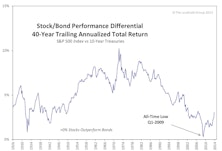
We were surprised to see that all differentials ten years and longer are still below their respective 1926-to-date medians, indicating they still have the potential to keep moving towards historical median levels. We expect stocks to outperform bonds going forward.
2013 Factor Performance: What Worked? What Will Keep Working?

Momentum and Value worked in 2013. Materials and Financials were the easiest sectors to exploit; Discretionary and Tech the most difficult. Momentum works in December; Value and Small Caps at the start of the year.
How Long Can Small Caps Lead?
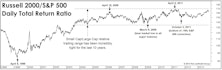
The Russell 2000 is about five points ahead of Large Caps YTD, and is approaching its April 2011 long-term relative peak. We view this outperformance as their leadership’s last gasp and not a new cycle.
Playing The Bounce - With A Twist
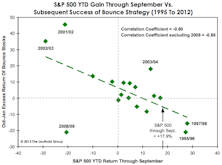
The historical batting average of this strategy has been decent, with gains in 9 of 18 years along with “excess” returns over the S&P 500 in 10 of 18 years. The best Bounce seasons have occurred when the market was either down for the year through September, or up only modestly.
Duration: It’s Not Just For Bonds Anymore
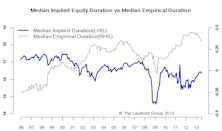
We measure the sensitivity of common stocks to changes in interest rates using Implied Equity Duration. Growth-oriented sectors tend to have higher duration than Value-oriented sectors, while regional differences are largely explained by interest rate and risk premium differentials.
A Comprehensive Look At The Emerging Markets: Diagnosis And Prognosis
We examine Emerging Markets from both the top-down and bottom-up perspectives as we try to identify where to move and what to expect. We check in on two successful EM thematic group ideas as well.
Rising Stocks And Rising Rates: It’s Not Uncommon

Today may feel different, but it isn’t. The past 13 months’ trading action in the U.S. is the second example of this phenomenon in the current (2009-to-date) cyclical bull market. We focus on 11 previous episodes for perspective. Plus we clarify recent thoughts on interest rates and stock market valuations.
Are Alternative Assets Effective In Hedging Portfolios?
Alternative assets have attractive return rates since 1994. But their portfolio diversification benefits have diminished as they become more equity like, though their correlations to bonds have fallen.
Disentangling Industry & Country Effects In A Global Equity Portfolio
Each of these effects has diminished in importance over time, but it’s still worth taking a look. Momentum is best at capturing the Industry effect, while Valuation works best at the Country level.
Fund Flows Still Not Quite As They Appear
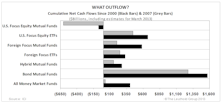
In this report we take an in-depth look at the evolution of the industry, particularly the U.S. mutual fund industry, to help understand how some fund flow trends are more of an indication of evolving investor preferences instead of an indication of retail investor sentiment toward a particular asset class.
 Subscribe to Advisor Newsletter